
Google Search Console has introduced a significant update for brands, creators, and marketers. The new Platform Properties feature allows you to track how your Instagram, TikTok, X, and YouTube content performs in Google Search and Discover, providing search data that has never previously been available within Search Console.
For years, website performance and social media performance have existed in separate reporting platforms. This update begins to bridge that gap, giving businesses greater insight into how their social content is discovered through Google. In this guide, we explain what Platform Properties are, how to set them up, what data they provide, and why they matter for your SEO and social media strategy.
Key Takeaways
- Google Search Console now supports Platform Properties for Instagram, TikTok, X, and YouTube, allowing you to monitor how social content performs in Google Search and Discover.
- The new reports reveal which search queries drive traffic to your social posts, helping you make more informed SEO and content decisions.
- Platform Properties are available even if you do not own a website, making Search Console more accessible for creators and publishers.
- Bringing search and social reporting together provides valuable insights into how audiences discover your content beyond the social platforms themselves.
What Are Google Search Console Platform Properties?
Platform Properties are a new property type within Google Search Console that connects directly to supported social media and video platforms. Once connected, Search Console reports on how your content performs within Google Search and Discover, rather than only tracking your website.
This means you can see which search terms are leading users to your Instagram posts, TikTok videos, X posts, or YouTube content, alongside the engagement those posts receive through Google.
It is a relatively small addition to Search Console, but it fills a long-standing reporting gap. Social content has appeared in Google Search results for years, yet marketers have had little visibility into how users were finding it through search. Platform Properties finally provide that missing insight.
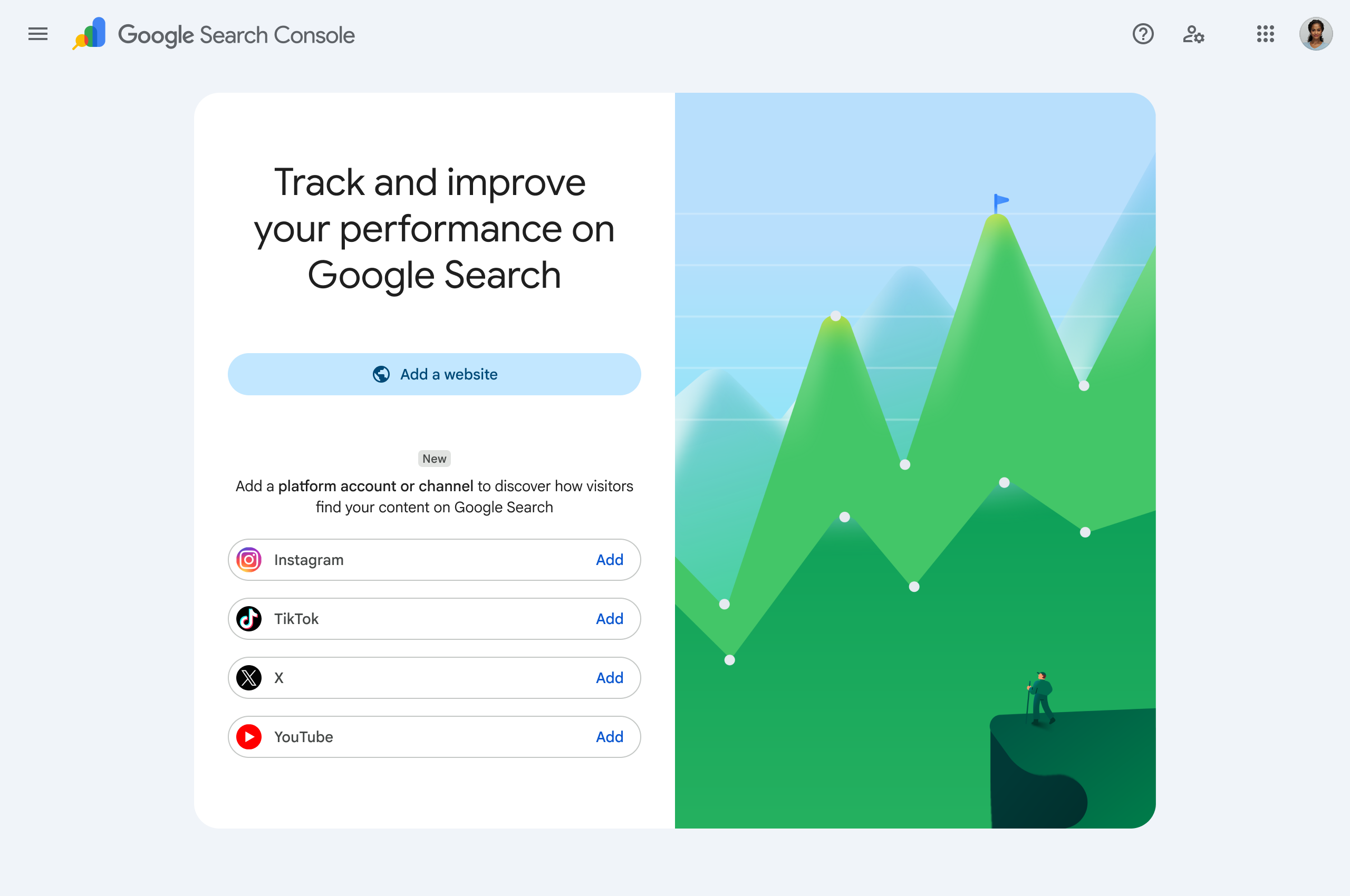
Which Platforms Are Supported?
Google has launched Platform Properties for four platforms:
- TikTok
- X
- YouTube
The rollout is taking place gradually, so the feature may not yet be visible in every Search Console account.
What Can You Track with Platform Properties?
Platform Properties include three familiar reporting sections, adapted specifically for social media content.
Performance Report
The Performance report shows key search metrics, including:
- Clicks from Google Search
- Impressions
- Search queries leading users to your content
- Individual posts generating the most search traffic
You can filter, sort, and export the data, making it useful for wider SEO reporting or integrating into existing marketing dashboards.
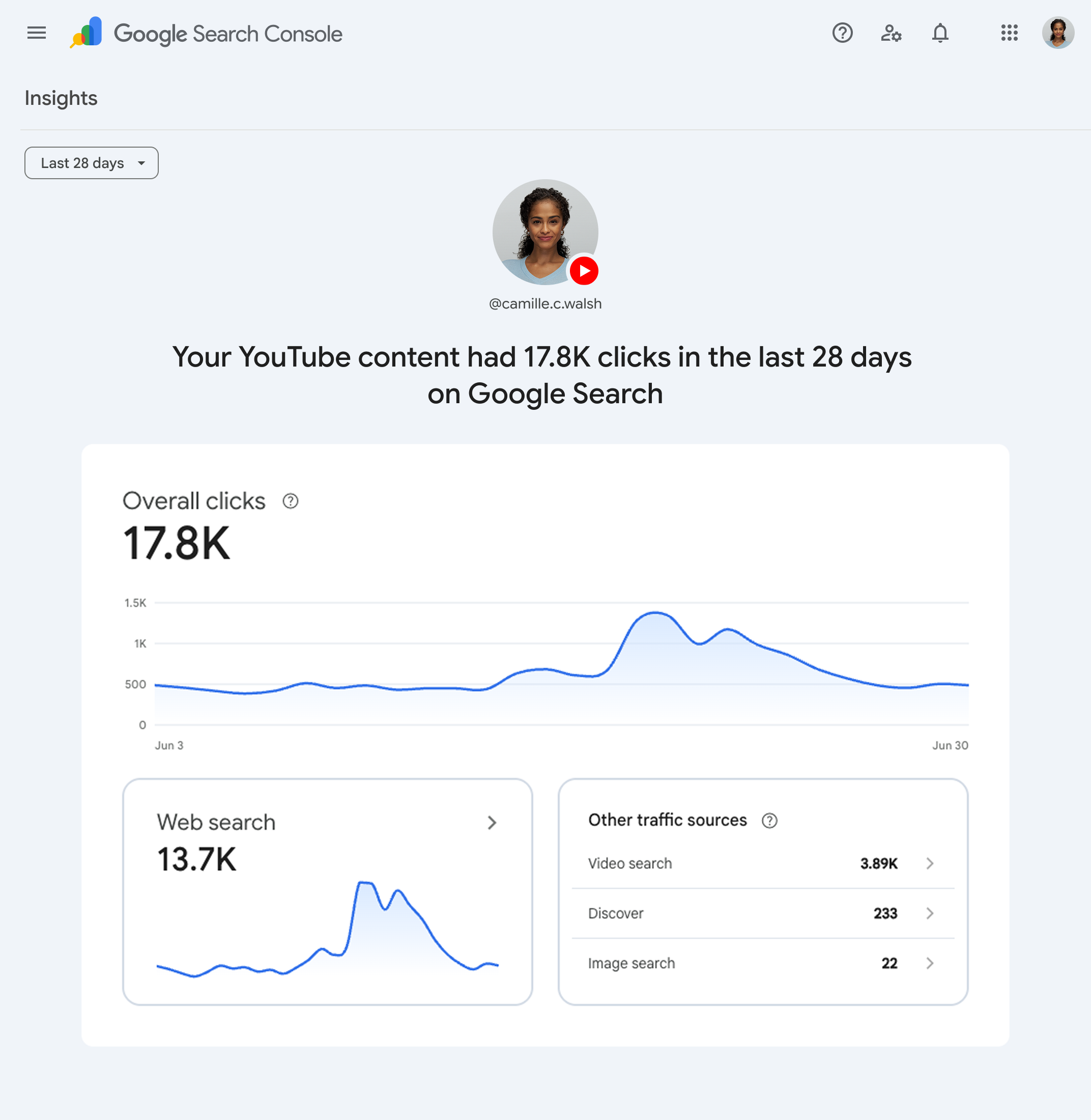
Insights Report
The Insights report provides a summary of recent performance, highlighting:
- Overall traffic trends
- Your highest-performing posts
- How users discover your account through Google Search
This report helps identify the types of content that consistently attract search visibility and can influence future content planning.
Achievements
Achievements track milestones within Search Console, such as reaching new click thresholds over a rolling 28-day period.
While less analytical than the other reports, they provide a simple way to monitor progress and demonstrate growth over time.
How to Set Up Platform Properties in Google Search Console
Setting up a Platform Property is straightforward.
- Open Google Search Console.
- Select Add Property.
- Choose Instagram, TikTok, X, or YouTube.
- Complete the verification process by authorising the connection.
Once verified, Search Console will begin collecting search performance data for that account.
How Are Platform Properties Different from Search Profiles?
Platform Properties should not be confused with Google’s recently introduced Search Profiles.
A Search Profile is a public-facing page that brings together a creator’s content in one place for users to browse.
Platform Properties are entirely different. They are private reporting tools that provide analytics about how your content performs in Google Search and Discover. They do not change how your content appears publicly or create a new destination for users.
The feature also builds on Google’s limited experiment from late 2025, when social channel reporting first appeared in Search Console for selected users.
Why This Update Matters for SEO and Social Media
This update reflects the increasingly close relationship between search and social media.
Social posts are no longer confined to their respective platforms. Google regularly indexes content from Instagram, TikTok, X, and YouTube, meaning users can discover social posts directly through Search and Discover.
Platform Properties allow marketers to answer important questions that social analytics alone cannot, including:
- Which Google searches are driving traffic to social content?
- Which posts perform well in search, rather than only within the platform?
- What topics attract search demand across both websites and social channels?
Understanding this data makes it easier to align SEO strategy with social media content planning, ensuring both channels target the topics people are actively searching for.
Why Isn’t LinkedIn Included?
Many B2B marketers have questioned why LinkedIn is absent from the initial launch.
The most likely reason is that Platform Properties rely on verification through each platform’s API. Google requires permission to verify account ownership securely before providing search data within Search Console.
Historically, LinkedIn has maintained tighter control over its data and API access than other social networks, particularly because of its focus on professional and commercial audiences.
While Google may expand support in the future, there has been no announcement regarding LinkedIn at the time of writing.
Search and Social Are Becoming More Connected
Google’s introduction of Platform Properties is another step towards bringing SEO and social media together.
For marketers, the update provides valuable insight into how social content performs beyond its native platform. Rather than relying solely on likes, views, or shares, businesses can now understand how users discover social content through Google Search and Discover.
As search behaviour continues to evolve, successful content strategies will increasingly consider how website content and social media work together. Brands that optimise both channels around search intent will be better positioned to increase their visibility across Google’s growing range of search experiences.
Need Help Aligning Your SEO and Social Media Strategy?
Search and social media are becoming more closely connected, creating new opportunities for brands to increase their visibility across Google. Understanding how audiences discover your content is only valuable if you know how to act on those insights.
Digital marketing agency in Surrey, topclick, helps businesses develop integrated SEO and social media strategies that improve organic visibility, create content around real search demand, and turn performance data into measurable growth. Contact our team to find out how we can help you get more from both channels.